
This site contains affiliate links, which means I’ll receive a commission if you purchase through my links at no extra cost to you. Please read full disclosure for more information.
Peonies: A Friendly Guide to Growing Beautiful Peony Blooms
Ah, peonies! There’s just something about beautiful peony flowers! Maybe it’s their delicately soft petals, their sweet scent, or the way they make a garden seem magical with their wonderful blooms. The range of colors and their size make these blooms perfect for gifts, fresh cut flowers for indoor home decor, and even a peonies wedding bouquet and centerpieces!
For me, peonies are considered the queen of my flower garden blooms. Now don’t get me wrong, I still love my roses, but I fell in love with the fragrant peony flowers a while back and have grown them in my backyard garden for many years now.
If you are thinking about adding peonies to your garden, or you’re just curious about these lovely plants, I’m here to walk you through it!
This blog post covers everything you need to know about peony flowers, from planting to blooming, and how to care for them. This post also explains how to propagate peonies in a beginner-friendly and rewarding way!
Let’s dig in!
What exactly are peonies?
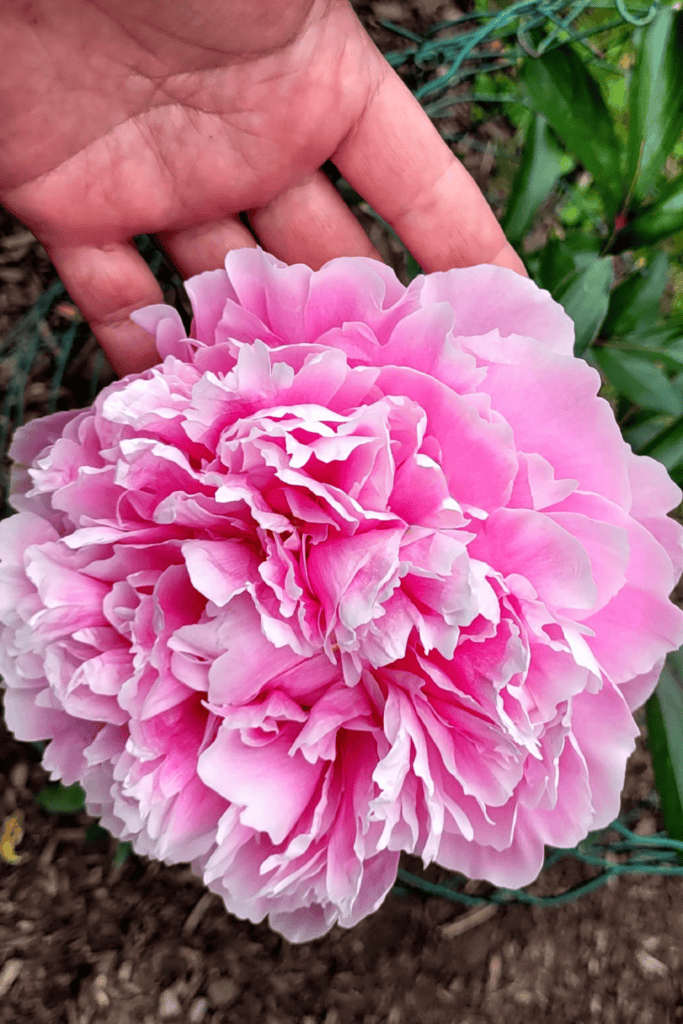
 Peonies are perennial plants, which means they come back year after year. They belong to the Paeoniaceae family and are known for their wonderfully big, fluffy blooms and rich green foliage.
What’s great about peonies is that they can live for decades with the right care.
These flowers aren’t just for show. Peony flowers have been cherished in gardens around the world and used for beautiful bouquets and displays for special events!
In my own backyard, I have seen huge, colorful, fragrant blooms every year. I love how they stand tall and silently shout, “Here I am! Look at me!”
Personal Tip:
Due to their demand, peony bulbs and peony rootings can get to be pretty expensive for the beginner or frugal gardener. However, know that peony bushes can be propagated and shared!
My own first few peony plants were gifted from a friend’s beautiful garden! They settled in nicely into my backyard flower beds and continue to bring joy through the years! The photos in this post are my own peony plants.
Just last fall, I once again propagated one of my own peonies and gifted it to my daughter for her garden!
Gardens are gifts that keep on giving!
Peony Flower Meaning
What do peonies symbolize?
Peony flowers are most commonly recognized as symbols for romance, good fortune, and prosperity.
Their lush, beautifully rounded blooms have long been associated with happiness in marriage and an abundant life. Perfect for weddings and romantic gardens.
Other cultures, for instance, the Chinese culture, often call the peony, “king of flowers” because this bloom is viewed as a flower that carries the message of honor and prosperity.
Personally, I find peony flowers make a wonderful gift. Whether it’s to say, “I love you”, “I’m thinking of you”, “Congratulations”, or “Thank you for being a great friend”, there is something very heartfelt about handing someone a fragrant peony bouquet of soft blooms!
Personal Tip:
On occasion, I have found a few ants in my peony flowers when I go to cut them for home decorating.
So before you bring those lush cut stems into your home, turn the peony flower to the ground and holding the stem near the bloom, gently tap or shake the flower to free any possible petal visitors before bringing them inside.
Types of Peonies and Gorgeous Peony Flower Colors
There are three main types of peonies:
- Herbaceous Peonies – These are the ones that die back in winter and regrow in the Spring. Their stems are soft and green, and they produce amazing round blooms
- Tree Peonies – Unlike herbaceous types, these have woody stems that remain all year.
- Intersectional (Itoh) Peonies – These are hybrids of the other two types
Personal Note:
My care and propagating section will be focused on the Herbaceous Peonies from my experience with them in my own backyard garden.
Peony Colors
Peonies come in numerous beautiful colors!
Some examples of each are:
 Pinks – Angel Cheeks and Sarah Bernhardt
Deep Reds – Red Charm and Many Happy Returns
Sunny Yellows – Lemon Chiffon, and Vanilla Schnapps
Crisp or Creamy Whites – Madame de Verneville and Festiva Maxima
Corals and Peachy Tones – Coral Charm and Coral Sunset
Personal Tip:
Can’t decide on one color? Try mixing colors for a more natural, cottage feel.
When Do Peonies Bloom?
Peonies thrive in USDA plant hardiness zones 3 – 8.
How warm the temperature and how sunny the location are contributing factors for the growth of peony flowers. Most peonies thrive in full sun, particularly herbaceous and intersectional varieties. Tree peonies can grow well in full sun to partial shade, though their large blooms often last longer when protected from intense sunlight.
In USDA planting zones 6–7, you can feel that ray of anticipation in mid to late March when the peony stems start to rise from the ground. Very soon, the backyard garden will be fragrant again with the beautiful blooms of colorful peonies.
Peonies typically flower over a span of seven to eight weeks, from late April through early June. The sequence usually begins with tree peonies, then herbaceous types, and finally intersectional (Itoh) hybrids.
Personal Tip:
When you purchase plants, most plant tags give you a quick summary of useful information for planting that particular plant.
If you are unsure of your planting zone, check with your local nursery or the USDA Planting Zone website.
Planting Peonies
As mentioned, herbaceous peonies do best in a sunny location. So check your front yard or backyard at different times of the day, before planting, to find the sunniest location for your peony flower garden.
Peonies do not like to be left in soggy soil. Look for a well-draining area after it rains.
To plant a herbaceous peony root:
- Dig a hole several inches deep. (6 to 8 inches is good)
- Backfill the hole with some of the soil to create a nice, loose foundation for placing the root. You should be able to plant the root about 2 inches deep.
- Have the buds (eyes) on the root facing up.
- Plant the root in the newly prepped area and cover with approximately 2 inches of garden soil. Be careful not to plant the root too deeply under the soil!
Peony Plant Care
- Plant – The best time to plant peony roots is in the Fall. However, if you are buying an already established plant, early Spring should be fine.
- Water – Only water your peony plant if it hasn’t rained. Once a week is typical, but obviously it depends on the weather. Higher temperatures might mean more frequent watering. Check the soil for dampness. Remember, peonies don’t like soggy soil.
- Fertilize if necessary – Herbaceous peonies tend to take care of themselves. If you feel you need to fertilize your peony plants, peonies prefer a neutral to slightly alkaline pH. Read labels carefully before purchasing fertilizers!
Personal Tip:
I seldom use fertilizer on my peonies. Sunshine and adequate water seem to make the best growing conditions for them.
- Support – Under proper conditions, peonies will produce beautiful blooms! One thing to consider is support for your peonies. Herbaceous peonies have somewhat flexible stems, and the weight of the blooms may bend the stems to the ground. Peonies should be staked to keep an upright position.
Personal Tip:
 I simply use bendable wire fencing. I cut it to be about 18 inches high and create a circle of fencing around the individual peony. Green or black fencing is less noticeable and gives all the stems freedom to move and grow. I put the fencing up as soon as the stems begin to emerge allowing them to grow through the openings, making the fencing virtually disappear as the plants mature.
- Prune and Deadhead – Herbaceous peonies die back in winter. Their buds for new growth are underground. After the flowers bloom in Spring, you can prune the dead blooms. I strongly recommend that you keep the stems growing until late Fall when they will naturally die back to the ground. Delaying cutting the stems allows the peony to store food for the next season’s growth. You can winterize your peony by cutting the stems to ground level in very late Fall.
Propagating Peonies
The joy of gardening is sharing your treasured flowers! Propagating herbaceous peonies is actually quite easy, even for novice gardeners!
Herbaceous peonies are usually planted as bare roots, which means you’ll see a thick root with a “crown” on top and a few small buds (often called “eyes”). You can buy them this way from a nursery, or create your own by dividing an older plant.
Sharing peony plants is a great way to help others expand their garden flower beds. Peonies look amazing in front and backyards, wherever there is a sunny spot.
To divide your mature peony:
- Start by gently digging up the whole plant.
- Shake or rinse off the soil so you can clearly see what you’re working with, and trim away any soft or rotted parts.
- Examine the crown, you’ll notice small pink or white buds. These buds are where new growth will come from.
- Using a clean, sharp knife, carefully cut the crown into sections. Each piece should have a minimum of 3–5 buds and a couple of sturdy roots to help feed the plant as it gets established. The more buds (eyes) you can section, the better!
- Dig a nice, wide hole so the roots have room to spread out comfortably. I usually make the hole a few inches wider than the section that I’m planting.
- Set the peony in place with the buds (eyes) facing upward, then cover them with just 1–2 inches of soil.
- Water to dampen the soil.
Personal Tip:
You may feel the need to plant the root deeper, but don’t! Peonies actually need to be near the surface to bloom well. If they are buried too deep, you may end up with lots of leaves, but no flowers come spring.
In Conclusion:
Peonies truly live up to their reputation as the queen of the garden. With their soft petals, beautiful fragrance, and stunning variety of colors, they bring charm and elegance to any space.
After years of growing and loving these blooms, it’s easy to see why they’re so special. With the right care and a little patience, anyone can enjoy their beauty season after season.
Now that you’ve learned how to plant, grow, and propagate peonies, you’re ready to bring a touch of that magic into your own garden.
Peonies are definitely worth a try! Happy gardening!
All the best!
Milissa Neirotti
This blog post was all about peony flowers, when they bloom, peony care, and how to propagate peonies in a way that’s beginner-friendly and rewarding!
Other Posts You May Like:
3 Super Easy Steps to Propagate Citronella Plants for FREE!
Amazing Amaryllis Bulb Care: How To Get Your Amaryllis To Bloom Again Indoors


The first time I saw a peony flower, I was in my 20’s. Someone had brought a bloom as a centerpiece for our table in the teacher’s lounge. I didn’t know what I was looking at; it looked like magic! So many soft petals in layer upon layers! I just sat down and stared for a bit. It must be wonderful to have a backyard of these. It’s usually too hot here for them, but I just might have to give one a try. Your article sounds like a foolproof way to get started… I think I’ll start dropping hints to my husband. LOL!
Peonies definitely beat roses when it comes to the scent.